Thirty-six views, ten thousand impressions
The Great Wave is not a painting. It is a print run — four trades, a dozen blocks, and a registration system made of two notches in the wood. Everything this series has said about presses, Edo said first with cherry planks.
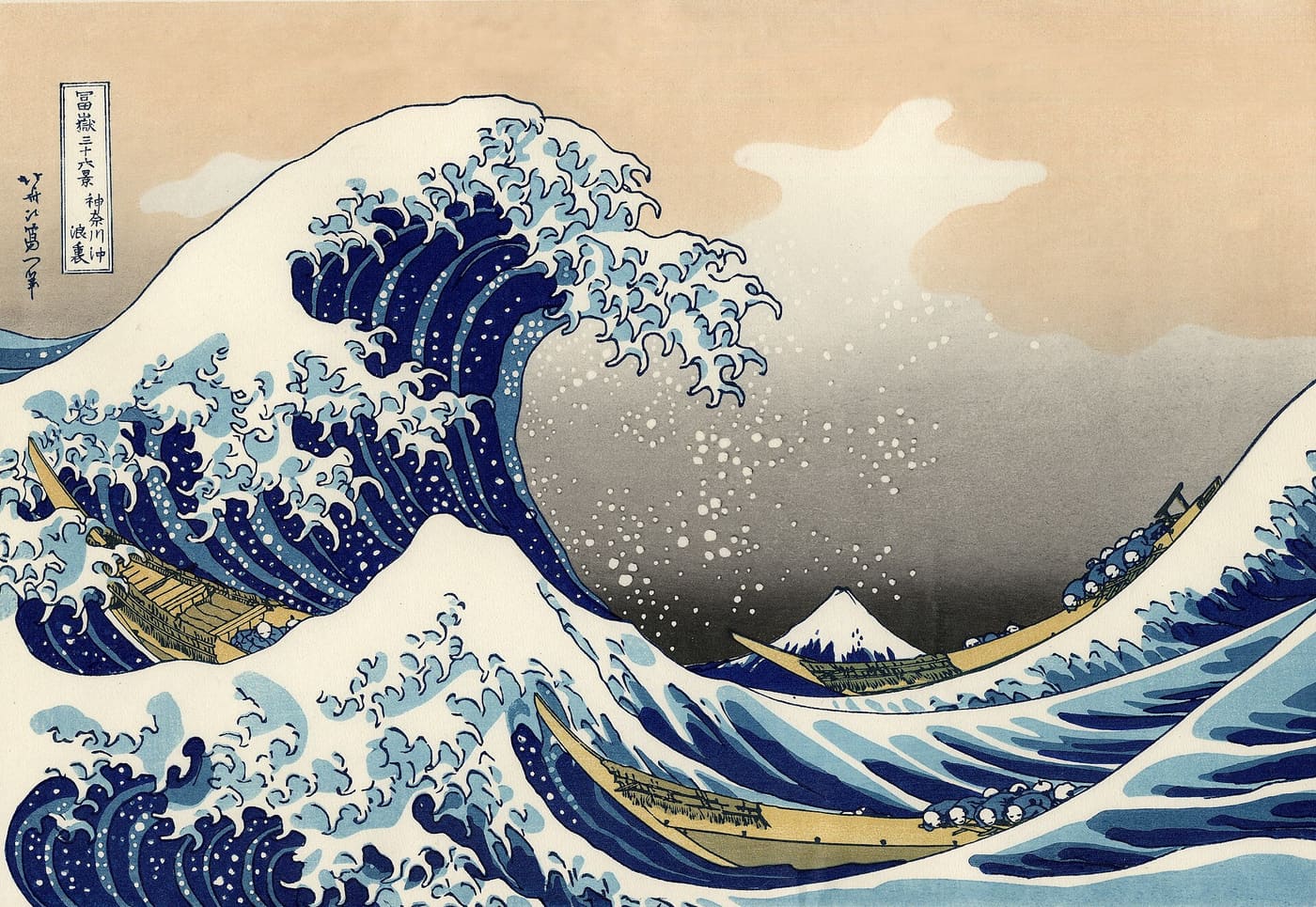
The most recognised image ever printed is not a painting. Under the Wave off Kanagawa exists as thousands of impressions — plausibly five to eight thousand in the Edo period alone1 — pulled from hand-carved cherry blocks until the blocks wore out, recut, and pulled again. It is press work, and every idea this series has described was already in it, two centuries before offset.
Four trades, one sheet
Hokusai never touched the finished print. Ukiyo-e was a production line with the labour divided the way a modern press room divides it, and the credit followed the money, not the work:
| Trade | Who | Does | Modern equivalent |
|---|---|---|---|
| Eshi | the designer | brush drawing, colour notes | the designer |
| Horishi | the block cutter | one block per colour | plate-making |
| Surishi | the printer | inks, registers, pulls each sheet | the press operator |
| Hanmoto | the publisher | commissions, owns the blocks | the publisher |
The blocks belonged to the publisher, which is why editions kept flowing after an artist's death and why "an original Hokusai print" means an original impression, not an original drawing. The drawing was destroyed in the making: it was pasted face-down on the first block and cut through.
Registration, with two notches
A colour print passed through the press once per colour — the Wave used around eight blocks — and every pass had to land on the last one to within a hairline. The solution was the kentō: an L-shaped notch and a straight one, carved into every block just outside the image. The printer seated the sheet's corner into the L, its edge against the bar, and pulled.
That is the whole mechanism. No pins, no optical alignment, no iron — two carved marks and a craftsman's thumb, holding registration a modern press would be content with. The coloured fringes that betray a misregistered offset sheet are exactly what a worn kentō produces, which is why late impressions of famous prints have blurred outlines: the notch, not the block, is what wore first.
The blue that made the series possible
The Wave's sky and water are Prussian blue, a synthetic pigment that had just become cheap through import. Every blue Japan had before it faded in years; Prussian blue held. The Thirty-six Views were advertised on the strength of the new colour, and the most famous image in printmaking is, among other things, an ink launch.
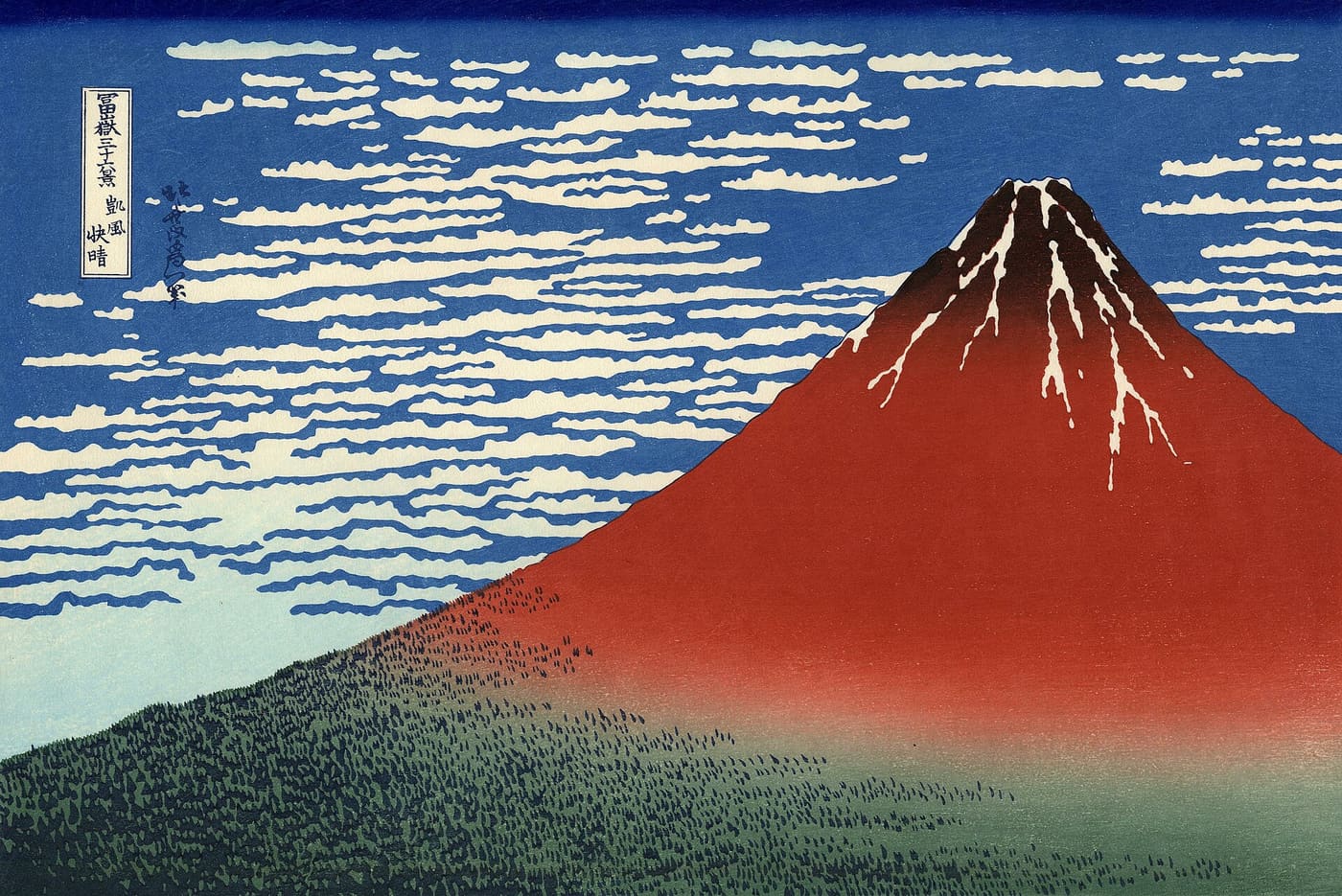
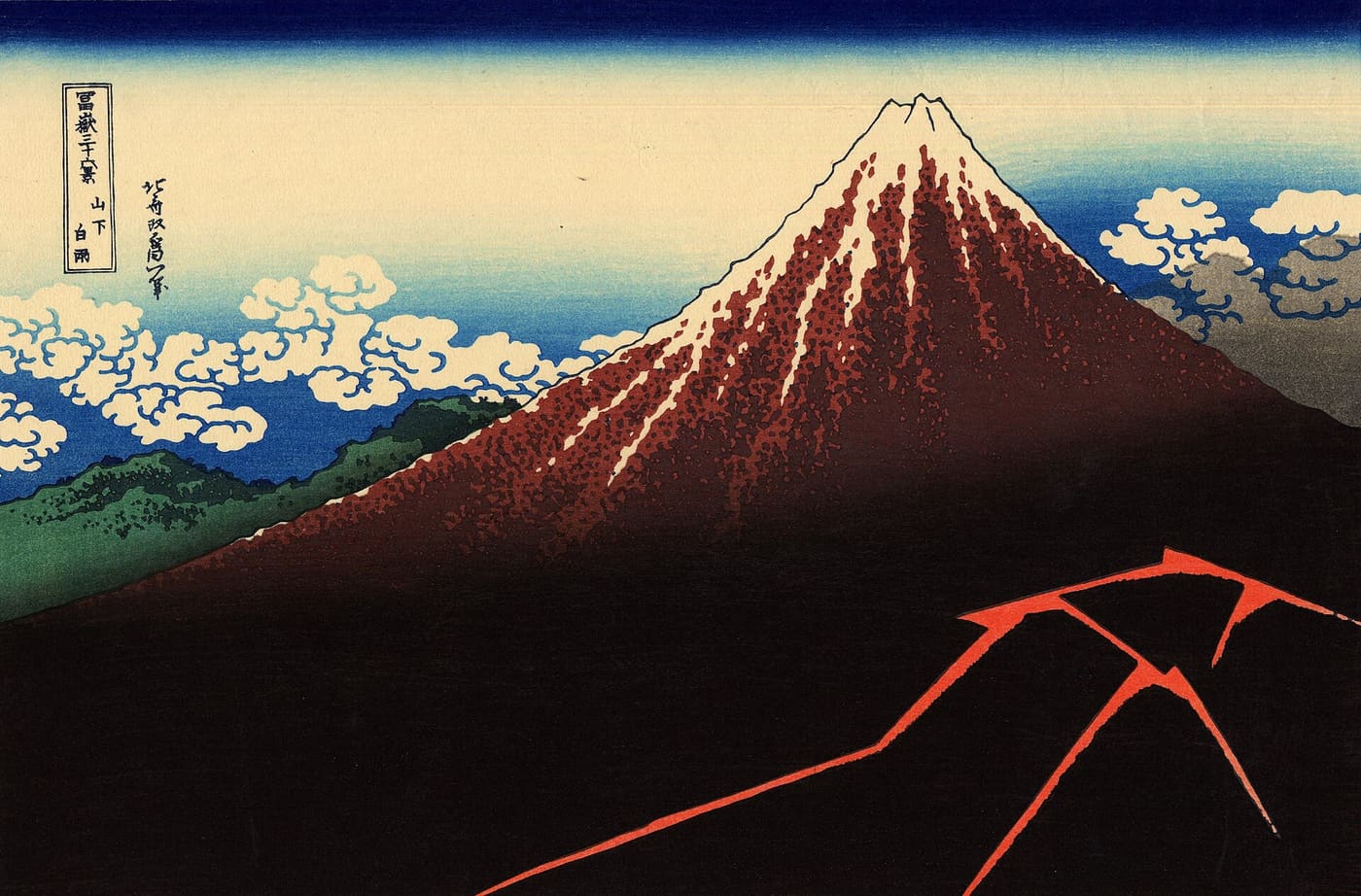
The two prints above are the same mountain from the same series, and comparing them is a lesson in what a colour block is: the compositions share their bones, but each carries its own small set of blocks, and the publisher could reprint whichever one sold.
An edition is not an object
Note
Two impressions of the same print can differ in colour, sharpness and even mood — early pulls from crisp blocks with careful inking, late pulls rushed from worn wood. Museums date impressions, not designs. When this series said a proof is a measurement and the file is a prediction, this is the oldest version of that sentence.
The press this site's posts keep circling — registration, trapping, the ink-and-paper decision — is usually the European one, iron and lead. It is worth ending the series somewhere else: a press of cherry wood and water-based ink, run by four trades who never signed together, holding tolerances we now need machines for. The constraints are eternal; the ironmongery is optional.
- Edo-period impression counts are estimates from publishers' records and surviving copies; scholars' figures for the Wave run from about five thousand to eight thousand, with later recuttings adding more. The honest number is "nobody knows, and it kept selling". ↩